Sobre la normalización de los tiroteos masivos y la responsabilidad de las decisionesOn the Normalization of Mass Shootings and the Responsibility of Decisions
Por Laigodivis Carmen Gómez · autora de Una nación de lutoBy Laigodivis Carmen Gómez · author of A Nation in Mourning
Escribí Una nación de luto durante años, y no lograba cerrarlo. Cada vez que creía haber llegado al final, había algo más: otro nombre, otra fecha, otra familia que recibía la llamada telefónica que da inicio a una secuencia ya conocida. En abril de este año decidí que el libro debía cerrarse, no porque la historia hubiera terminado, sino porque comprendí que esa misma imposibilidad de cerrar era parte del fenómeno que el libro examina. El duelo estadounidense por la violencia armada tiene una geometría reconocible y repetida. Lo que no está prefigurado en esa geometría es el cambio. Eso, todavía, hay que construirlo.I wrote A Nation in Mourning for years, and I could not manage to close it. Every time I believed I had reached the end, there was something more: another name, another date, another family receiving the phone call that begins an already familiar sequence. In April of this year I decided the book had to close, not because the story had ended, but because I understood that this very impossibility of closing was part of the phenomenon the book examines. American mourning over gun violence has a recognizable, repeated geometry. What is not prefigured in that geometry is change. That, still, has to be built.
Y la historia volvió a repetirse. El sistema que el libro documenta no se detuvo el día en que entregué el manuscrito.And the story repeated itself once again. The system the book documents did not stop on the day I turned in the manuscript.
La frecuencia se ha convertido en rutinaFrequency Has Become Routine
El Gun Violence Archive, organización de investigación independiente que registra la violencia armada en los Estados Unidos, define un tiroteo masivo como un incidente en el que cuatro o más personas resultan baleadas, heridas o muertas, sin contar al agresor (Gun Violence Archive, 2026). Bajo esa definición, el país acumula cientos de estos incidentes cada año. El registro público de tiroteos masivos correspondiente a 2026 documentaba 147 personas muertas y 529 heridas en 134 incidentes hasta el 30 de abril de este año (List of mass shootings in the United States in 2026, 2026). El Rockefeller Institute of Government, por su parte, contabiliza más de mil setecientas víctimas mortales en tiroteos masivos públicos desde 1966 (Schildkraut et al., 2026).The Gun Violence Archive, an independent research organization that tracks gun violence in the United States, defines a mass shooting as an incident in which four or more people are shot, wounded, or killed, not counting the perpetrator (Gun Violence Archive, 2026). Under that definition, the country accumulates hundreds of these incidents every year. The public record of mass shootings for 2026 documented 147 people dead and 529 wounded across 134 incidents as of April 30 of this year (List of mass shootings in the United States in 2026, 2026). The Rockefeller Institute of Government, for its part, counts more than seventeen hundred fatalities in public mass shootings since 1966 (Schildkraut et al., 2026).
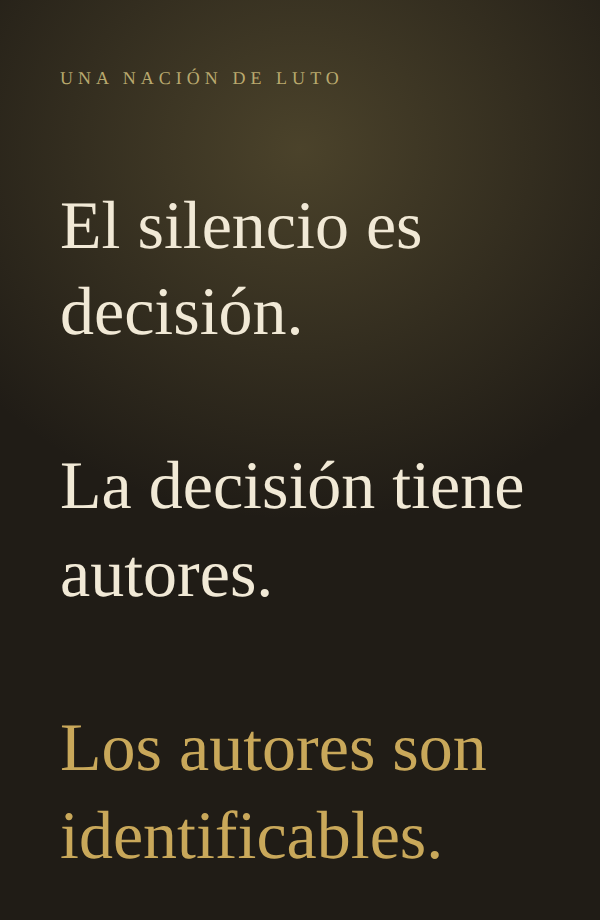
Estas cifras no son un hecho natural. Constituyen el resultado documentado de decisiones legales específicas, tomadas por actores identificables, durante un período concreto. Esa es la tesis central de mi libro y la sostengo aquí sin atenuación: el silencio es una decisión, la decisión tiene autores, y los autores son identificables.These figures are not a natural fact. They are the documented result of specific legal decisions, made by identifiable actors, during a concrete period. That is the central thesis of my book, and I maintain it here without softening it: silence is a decision, the decision has authors, and the authors are identifiable.
El rostro del agresor es, con frecuencia, el de un menorThe Perpetrator’s Face Is Often That of a Minor
El 18 de mayo de 2026, dos jóvenes de 17 y 18 años abrieron fuego en el Centro Islámico de San Diego, la mezquita más grande de esa ciudad, y asesinaron a tres hombres antes de quitarse la vida (2026 Islamic Center of San Diego shooting, 2026; NBC News, 2026). Las víctimas fueron Amin Abdullah, de 51 años, guardia de seguridad cuya intervención, según la policía, evitó una tragedia de mayor escala; Mansour Kaziha, de 78 años, cuidador de la mezquita desde su construcción en la década de 1980; y Nadir Awad, de 57 años (City of San Diego, 2026).On May 18, 2026, two young men aged 17 and 18 opened fire at the Islamic Center of San Diego, the city’s largest mosque, and killed three men before taking their own lives (2026 Islamic Center of San Diego shooting, 2026; NBC News, 2026). The victims were Amin Abdullah, 51, a security guard whose intervention, according to police, prevented a larger-scale tragedy; Mansour Kaziha, 78, the mosque’s caretaker since it was built in the 1980s; and Nadir Awad, 57 (City of San Diego, 2026).
Uno de los agresores cursaba la secundaria de manera virtual y estaba por graduarse ese mismo mes (NBC News, 2026). Las autoridades investigan el hecho como crimen de odio, tras hallar un manifiesto de contenido racista, islamofóbico y antisemita que hacía referencia a los atentados de Christchurch, así como armas tomadas, en al menos un caso, del domicilio familiar (2026 Islamic Center of San Diego shooting, 2026; CNN, 2026).One of the perpetrators was completing high school virtually and was due to graduate that same month (NBC News, 2026). Authorities are investigating the incident as a hate crime, after finding a manifesto containing racist, Islamophobic, and antisemitic content that referenced the Christchurch attacks, as well as weapons taken, in at least one case, from the family home (2026 Islamic Center of San Diego shooting, 2026; CNN, 2026).
No fueron monstruos surgidos de la nada. Fueron adolescentes radicalizados, con acceso a armamento y sin una intervención institucional oportuna. Esta observación no diluye la responsabilidad penal de nadie. Pero obliga a una pregunta incómoda que mi libro persigue a lo largo de sus capítulos: detrás de muchos agresores hay también un menor a quien el sistema alcanzó demasiado tarde. Reconocer ambas verdades a la vez es la única posición honesta.They were not monsters that appeared out of nowhere. They were radicalized teenagers, with access to weapons and without timely institutional intervention. This observation does not dilute anyone’s criminal responsibility. But it forces an uncomfortable question that my book pursues throughout its chapters: behind many perpetrators there is also a minor whom the system reached too late. Recognizing both truths at once is the only honest position.
La pregunta que recorre el libroThe Question That Runs Through the Book
¿En qué momento dejamos de inmutarnos? Cuando una tragedia se repite con tal frecuencia que deja de ocupar los titulares, hemos cruzado un umbral peligroso: el de la anestesia colectiva. La normalización no significa que el dolor haya desaparecido. Significa que hemos dejado de mirarlo. Y lo que no se mira, no se corrige.At what point do we stop being moved? When a tragedy repeats so frequently that it no longer makes headlines, we have crossed a dangerous threshold: that of collective anesthesia. Normalization does not mean the pain has disappeared. It means we have stopped looking at it. And what is not looked at is not corrected.
Mi libro no es un texto de consuelo. Es un trabajo de análisis jurídico y de política pública apoyado en fuentes primarias: el Informe del Fiscal del Estado de Connecticut sobre Sandy Hook, los hallazgos del Comité Investigador de la Cámara de Texas sobre Uvalde, la revisión del incidente crítico del Departamento de Justicia, la advertencia del Cirujano General de junio de 2024 y la investigación epidemiológica revisada por pares. La conclusión que de allí se desprende no es una opinión sentimental. Es una constatación: lo que se decidió, puede decidirse de otro modo.My book is not a text of consolation. It is a work of legal and public-policy analysis grounded in primary sources: the Connecticut State’s Attorney’s report on Sandy Hook, the findings of the Texas House investigative committee on Uvalde, the Department of Justice’s critical incident review, the Surgeon General’s advisory of June 2024, and peer-reviewed epidemiological research. The conclusion that follows is not a sentimental opinion. It is a finding: what was decided can be decided otherwise.
Escribir este libro no fue fácil. Leerlo lo será menos. Pero el verdadero fracaso no es el dolor de leerlo; es leer estas noticias y no sentir nada. El día en que deje de dolernos la sangre de nuestros niños y de nuestros jóvenes, habremos perdido algo más que vidas. Habremos perdido la capacidad de salvarlas.Writing this book was not easy. Reading it will be even less so. But the real failure is not the pain of reading it; it is reading this news and feeling nothing. The day the blood of our children and our young people stops hurting us, we will have lost something more than lives. We will have lost the ability to save them.
Que nos siga doliendo. Porque el dolor, aquí, es todavía una forma de la responsabilidad.May it keep hurting us. Because pain, here, is still a form of responsibility.